Glorious
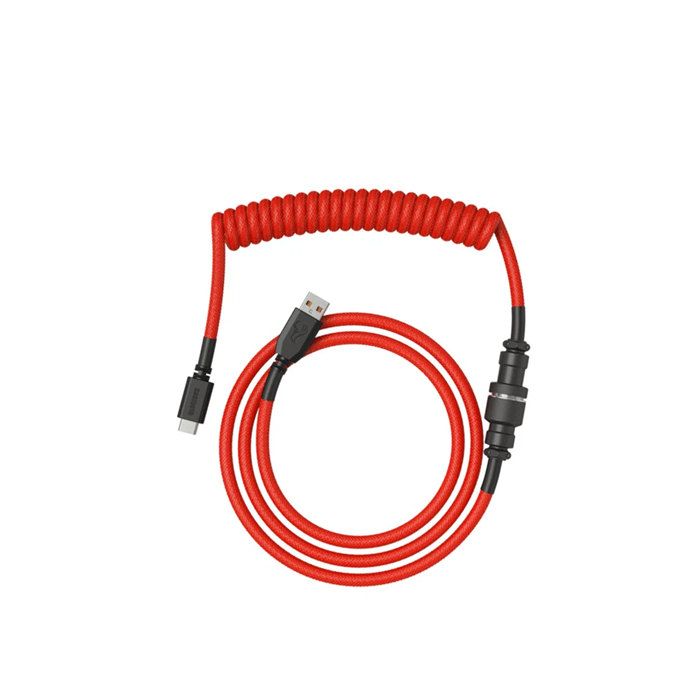
Glorious Coiled Cable - Crimson Red
Glorious Coiled Cable - Crimson Red
SKU: GLO-CBL-COIL-RED
Have a question?
-
All orders are dispatched the next business day!
-
We will beat any price. We back all products with a 1 year guarantee.
Couldn't load pickup availability
|
Design and Appearance Color: Crimson Red, featuring a double-braided, red textile sleeve woven over a red rubber coating, with black connectors. Aesthetics: Inspired by vintage PS/2 coiled cables, it creates a clean, tidy look on your desktop. The tight, "springy" coils are engineered to maintain their shape over time. Connections: The cable has a durable, 5-pin metal aviator connector that securely joins the coiled and straight sections. This allows you to mix and match cable sections from different colors or easily connect/disconnect your keyboard. Performance and Usage Function: The primary benefit of this cable is its aesthetic appeal and the tidy cable management it provides, making it an artisan accessory for enthusiasts. Connectivity Notes: For optimal performance, it's recommended to connect directly to a port on your PC rather than a USB hub. In some rare cases, users may experience connection issues, but most can be resolved through basic troubleshooting. Gaming: While sufficient for most gaming, those who require polling rates above 1,000 Hz (e.g., in competitive esports) may need to look for a USB 3.0 or higher cable. |
||||||||||||
Specification:
|
Description
Description
|
Design and Appearance Color: Crimson Red, featuring a double-braided, red textile sleeve woven over a red rubber coating, with black connectors. Aesthetics: Inspired by vintage PS/2 coiled cables, it creates a clean, tidy look on your desktop. The tight, "springy" coils are engineered to maintain their shape over time. Connections: The cable has a durable, 5-pin metal aviator connector that securely joins the coiled and straight sections. This allows you to mix and match cable sections from different colors or easily connect/disconnect your keyboard. Performance and Usage Function: The primary benefit of this cable is its aesthetic appeal and the tidy cable management it provides, making it an artisan accessory for enthusiasts. Connectivity Notes: For optimal performance, it's recommended to connect directly to a port on your PC rather than a USB hub. In some rare cases, users may experience connection issues, but most can be resolved through basic troubleshooting. Gaming: While sufficient for most gaming, those who require polling rates above 1,000 Hz (e.g., in competitive esports) may need to look for a USB 3.0 or higher cable. |
||||||||||||
Specification:
|
Item Specifics
Item Specifics